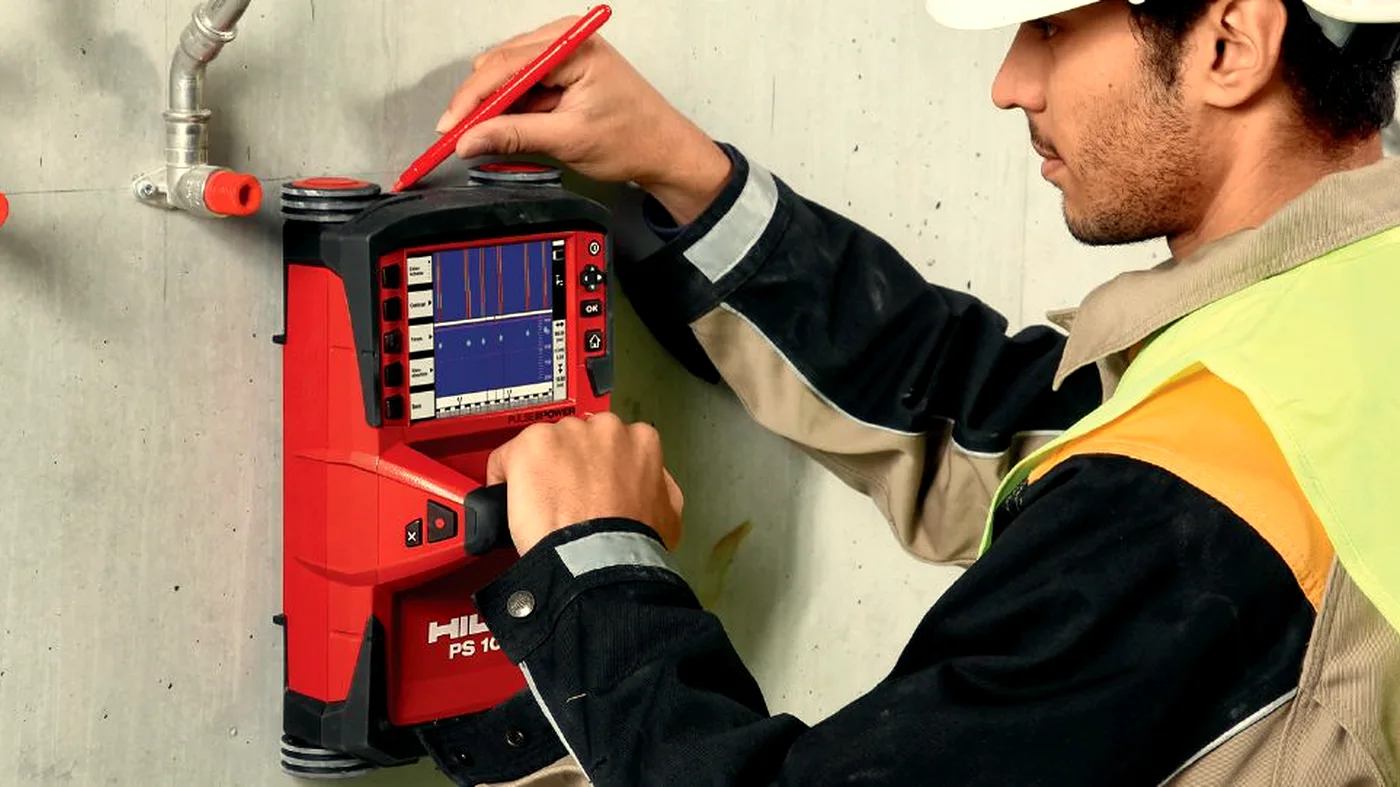
Void Detection
GPR identifies voids, honeycombing, and delamination behind the concrete surface.
See inside reinforced concrete, before you drill.
Voids inside concrete can compromise capacity and durability. GPR reveals voids, honeycombing, and delamination behind the visible surface, giving engineers a clear picture of where to remediate and where the concrete is sound.
Where it helps
- Before drilling, coring, cutting or fixing
- Before structural alterations to slabs, walls, or columns
- When post-tension cables may be present
- When the original drawings are missing, incomplete, or unreliable
- Before any penetration of a structural member
- When a slab investigation, void survey, or as-built record is required
What you receive
- On-slab marker plan in survey paint or chalk
- Annotated PDF report with depths and locations
- Digital DXF / DWG plan compatible with your CAD software
- Photographs of marked-up areas
- Surveyor sign-off and method statement
A note on interpretation. GPR indicates the likely position and depth of reinforcement, services and voids within the scanned area. It does not confirm material strength or structural adequacy — structural decisions remain with your engineer.
Often surveyed together.
Ferro Scanning
Electromagnetic scanning to map reinforcement, measure cover depth, and estimate bar diameter without touching the concrete.
Learn moreConcrete Testing
On-site non-destructive and intrusive testing methods, including rebound hammer testing, pull-out testing, core extraction, and laboratory compressive strength testing.
Learn moreLarge-Scale GPR
Multi-channel and array GPR for utility mapping, highways, airfields, archaeology, and ground investigation.
Learn moreMore from GPR Concrete Scanning.
- GPR Concrete ScanningBefore Drilling
Locate reinforcement, post-tension cables and conduits before any drilling, coring or fixing work begins.
- GPR Concrete ScanningStructural Assessment
Use GPR to inform structural assessment with accurate reinforcement layout and slab thickness data.
- GPR Concrete ScanningPost-Tension Cables
Identify likely post-tension tendon positions where detectable before drilling. Striking a tendon is one of the most expensive avoidable incidents on a PT slab.
Need a scan before you drill?
Send drawings, photos or proposed fixing locations and we'll advise the right survey approach.